
Harnessing AI-Driven Vulnerability Scanning for Space Systems Security
Recent advances in large language models (LLMs) are reshaping how developers can proactively search for a hidden vulnerability in complex aerospace systems.
Tomas Pena, D.Sc.
2/9/20262 min read
In today’s rapidly evolving space ecosystem, cybersecurity is as critical as orbital mechanics. Spacecraft, satellites, and mission control networks operate as high-value targets for nation-state actors and sophisticated cyber adversaries. A single overlooked vulnerability in onboard software or ground infrastructure can jeopardize multi-billion-dollar missions and compromise global communication systems. Yet, the complexity and interdependency of modern space systems make vulnerability discovery exceptionally challenging—especially as codebases expand across embedded systems, cloud interfaces, and distributed communication layers.
The Challenge of Space Cybersecurity
The cyber threat landscape facing space assets is expanding faster than traditional mitigation approaches can adapt. Attack vectors now span from spoofed telemetry and uplink command injection to mission data exfiltration and supply chain tampering. Conventional vulnerability scanning tools, while useful, often rely on signature-based detection or static analysis that struggles to expose the more nuanced flaws hidden within code libraries and across infrastructures—such as logic-level vulnerabilities and subtle timing-dependent weaknesses. These issues may not trigger typical alerts but can still threaten mission safety and operational integrity.
The AI Revolution in Vulnerability Detection
Recent advances in large language models (LLMs) are reshaping how developers can proactively defend complex aerospace systems. Tools built on modern architectures, such as Claude Opus 4.6, are now demonstrating a remarkable ability to identify contextually complex or previously undetectable vulnerabilities during early software development cycles. Unlike traditional scanners, LLM-driven systems can analyze entire repositories, configuration files, and documentation holistically—understanding both code semantics and system intent.
Claude Opus 4.6, for example, integrates deep reasoning over large codebases, detecting architectural inconsistencies or insecure patterns across distributed systems. It translates findings into natural-language reports that are directly actionable by development teams. This capability transforms vulnerability detection from a reactive compliance necessity into an intelligent, continuous design partner.
Integrating LLM Tools into Space Development Pipelines
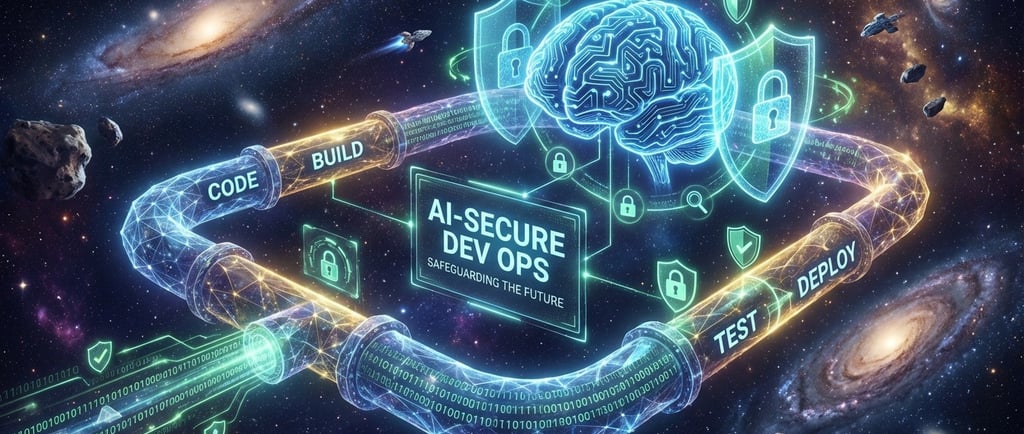
By integrating AI-powered vulnerability checkers into CI/CD pipelines, space companies can achieve continuous monitoring and remediation across all development stages. These systems can function as virtual code reviewers, providing real-time insights during iterative development or pre-launch verification. However, successful adoption requires balancing automation with human oversight. False positives, model hallucination, and compliance alignment with standards like ECSS and ISO/IEC 27001 remain practical challenges. Moreover, certification pathways for AI-assisted tools will need to mature before full operational deployment in flight-critical systems.
A Strategic Imperative for the Space Sector
Despite integration hurdles, the strategic advantage is clear: adopting advanced LLM-based vulnerability detection empowers space organizations to maintain a proactive, adaptive cybersecurity posture. As missions scale in sophistication and interconnectivity, conventional methods alone will not suffice to ensure resilience. Tools leveraging architectures like Claude Opus 4.6 represent the next evolution—enabling smarter, faster, and broader vulnerability management across the mission lifecycle.
In conclusion, space companies should prioritize adopting AI-enabled vulnerability checkers not as optional enhancements but as integral components of their cybersecurity frameworks. By harnessing the analytical depth of LLMs, the space sector can protect its most critical infrastructure with precision, foresight, and agility—ensuring that the final frontier remains a secure one.